
Clark County Tax Record Fields
Two offices shape Clark County property tax records. The Assessor identifies each parcel, sets its value, and processes exemptions. The Treasurer bills, collects, and manages delinquency and tax-deed matters. A Greenwood tax-area label only points to the taxing area. That label is a clue, not the amount due.
| Field | What It Shows | Where |
|---|---|---|
| Parcel and owner | The tract key and displayed ownership string | Assessor and Greenwood ownership layer |
| Assessed value | The assessor's value conclusion for the tax year | Assessor record or notice |
| Exemption | Approved reduction affecting taxable value | Assessor |
| Tax bill and status | Charge, installment, payment, or balance information | Treasurer |
| Delinquency or sale | Unpaid-tax and tax-deed process material | Treasurer and operative notices |
Idaho law assesses taxable property at 100 percent of market value before exemptions. That statewide rule has limits. A tax assessment is never the same thing as a recorded sale price or a private appraisal.
Clark Assessor and Treasurer Roles
The Clark County Assessor site gathers GIS tools, forms, homeowner-exemption material, and plat-map resources. The public map is useful. It exposes Parcel, Owner, Mail Addr, St Addr, Location, Acres, and Tax Area fields. No full assessment-card inventory appears there. Confirm land, improvement, total, value-year, sale, and exemption details with the office rather than assuming them.
The Clark County Treasurer office handles bills and payments. Its tax-payment page links the official payment handoff. The page lists no static bill-search fields, parcel format, tax-year coverage, payment history, exports, or copy fees. A thin portal never merges the two offices' duties.
Look Up a Clark Tax Bill
Start a Clark County property tax lookup with the physical address. Pull the complete parcel identifier from Greenwood next. Keep the tax year in view throughout. An amount from one year should never be compared with a value or exemption from another without checking the applicable notice.
- Use the county GIS to match the street address with Parcel, Owner, Location, and Tax Area.
- Ask the Assessor for the assessment notice or card and confirm the value year, property description, and exemptions.
- Open the Treasurer's official payment route or contact the office with the exact parcel or account clue.
- Read the bill, installment, payment status, and any delinquent balance for the same year.
- If a sale is suggested, check the current tax-deed page and obtain the legally operative notice and redemption status.
- Assessed value
- The assessor's tax-year value conclusion under Idaho's market-value standard.
- Levy
- The rate applied by relevant taxing districts to calculate the charge.
- Homeowner exemption
- A statutory reduction for qualifying owner-occupied property, subject to current rules.
- Tax lien
- A legal claim tied to unpaid tax, distinct from ordinary ownership.
Clark Tax Payment Access
The county tax-payment page is an instruction sheet, not a public tax roll. Its external portal may require bill or account details the static page never lists. Phone backup exists. Call the Treasurer at 208-374-5455 with the parcel, owner, and tax year. The address works as a location check. The official Treasurer source gives the route.
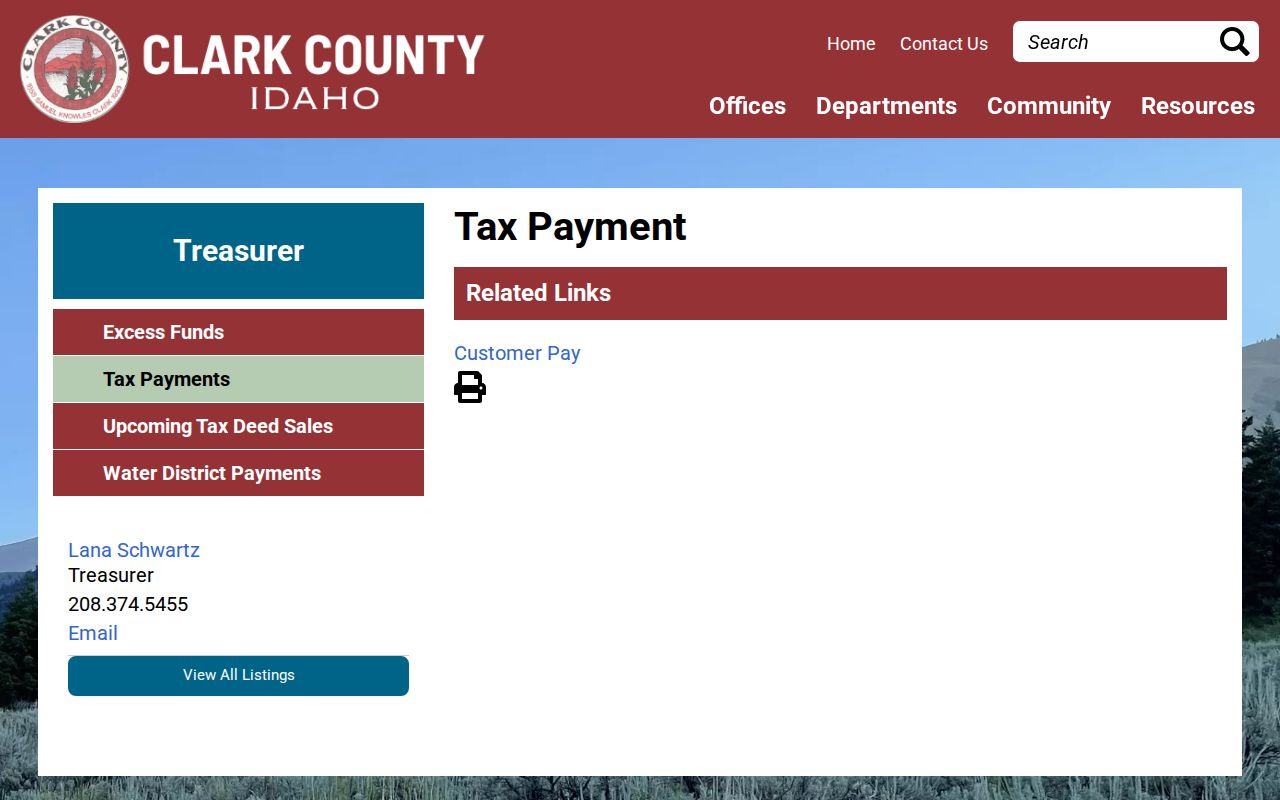
The image shows the county's online payment route. It cannot prove which tax-record fields appear after account entry. Treat it as a doorway, not a tax roll.
Note: Confirm any convenience charge, accepted method, and posting date in the live payment flow before submitting a Clark County payment.
Idaho's property-tax calendar sends bills in November. The first installment falls due December 20. A second-half installment may follow on June 20. Weekends, notices, delinquency, or a prior payment can shift what the account now requires, so apply the dates to the specific bill and year. The Treasurer, not an old portal screenshot, holds the current balance and posting status.
Idaho Market-Value Assessment
Idaho assesses taxable property at 100 percent of market value before exemptions. Assessors weigh sales data and property characteristics. Their annual conclusion can differ from a past deed's price. Market conditions pull the numbers apart. So do the valuation date, property changes, and the nature of the transfer.
The distinction matters in Clark County property tax records. A recorded consideration is a transaction observation. Assessed value is the official tax value for the stated year. Taxable value reflects exemptions or other adjustments. The amount due then depends on levies and the relevant taxing area. The Clark County property values resource explains what these numbers mean. This page follows the bill and appeal process.
Clark Homeowner Exemption
The Assessor's site links a homeowner-exemption page. Current statewide guidance controls the Idaho rules. The 2026 guidance reflects HB 843. Idaho Code section 63-602G sets the rest. The rules include a full 50 percent exemption up to the statutory maximum, no proration, a one-acre limit, and current filing-time rules. Rely on current instructions, not older maximum amounts left on legacy pages.
Eligibility and timing must be checked for the current year. File with the Clark County Assessor, not the Treasurer. The Treasurer applies the resulting tax record but never decides the exemption. Keep proof of ownership and occupancy ready. Ask which date the application must be complete for the claimed year.
The Clark County exemption page is the local entry point.
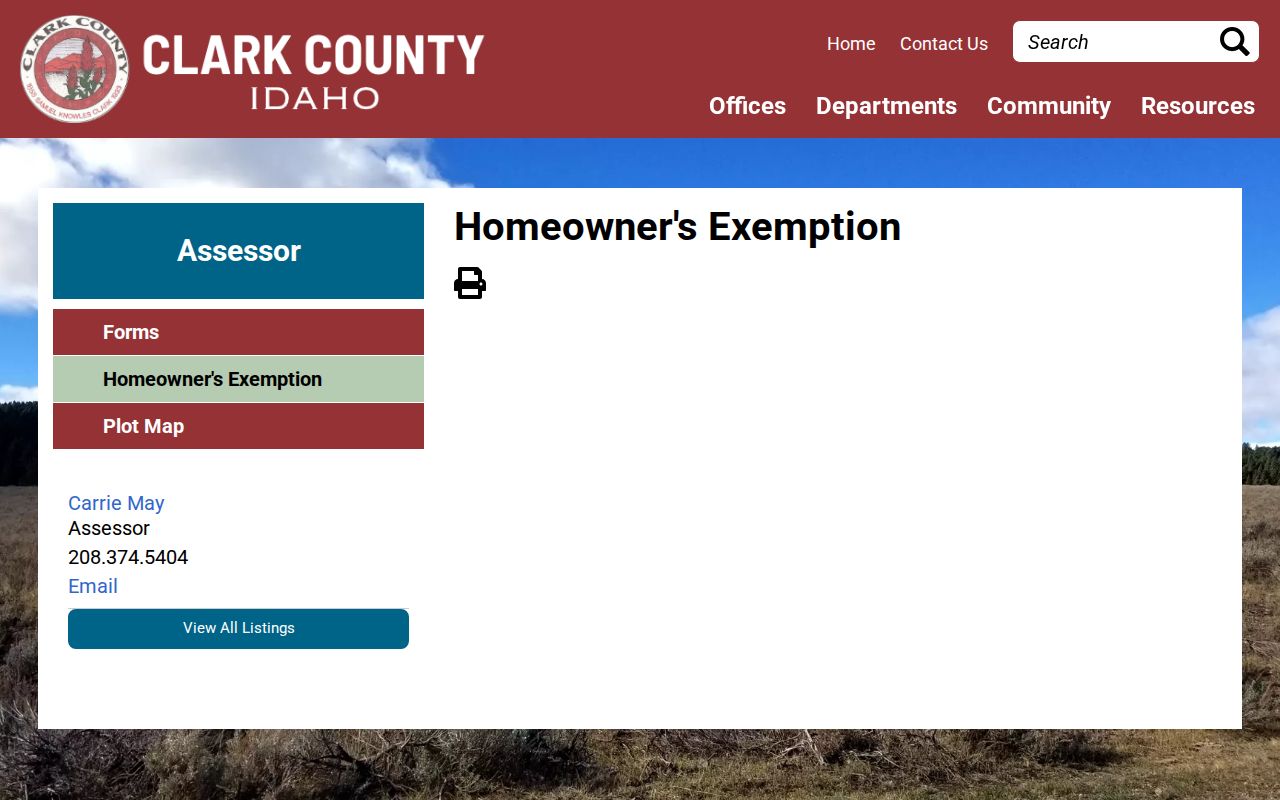
Read the local landing with current Idaho Tax Commission guidance. Older terms can go stale. An exemption changes the taxable result. It does not rewrite the recorded deed. It also sets no sale price. Confirm the exemption sits on the correct parcel and assessment year. A purchase, move, trust transfer, or parcel split may call for a new filing or supporting document under current instructions. Ask the Assessor. Never infer eligibility just because the prior owner's bill showed relief.
Reduction Program Record Fields
Idaho's property tax reduction forms ask for more than an address. Expect fields for county, code area, parcel number, ownership, income, and a signature. A section is also included, and the county assessor completes it. The program adjusts a tax bill. It does not change the land's market evidence or a recorded transfer price.
Apply through the Assessor with the current form year. Never carry figures from an older form into a new claim. Sensitive income or eligibility material belongs in the stated official channel. It should not go through a broad public-record request.
The Idaho Tax Commission homeowner resources explain the details.
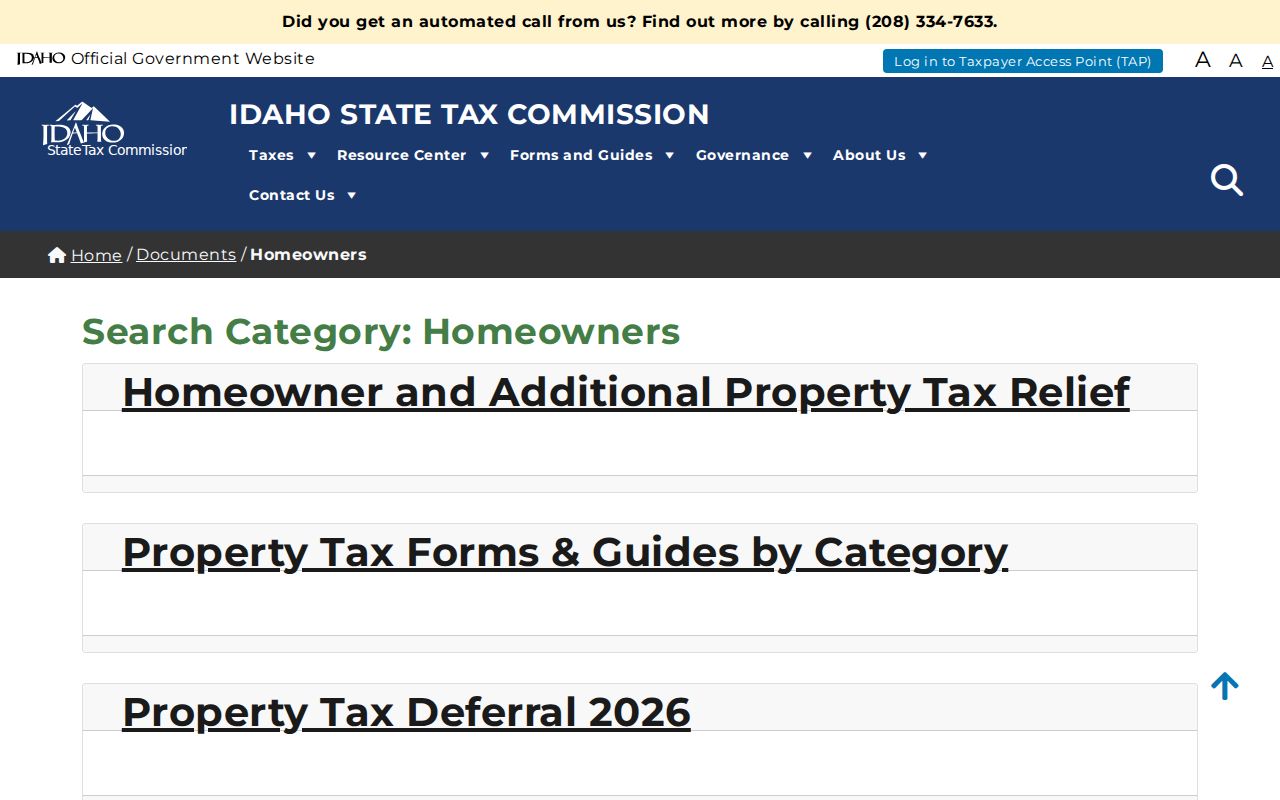
This state source provides the current framework that the Clark County Assessor administers locally.
Clark Delinquency and Tax Sales
Clark County's Treasurer posts pages for upcoming tax-deed sales and excess funds. Those pages often carry little current detail. Start with the upcoming tax-deed sales page. Then ask the Treasurer directly for the operative notice, redemption status, sale list, and excess-funds procedure. A portal's condition alone never proves that a sale is final.
Keep the tax lien separate from ownership. Delinquency creates a claim and a statutory process. But the owner of record sits in a different record entirely. Confirm any transfer only through the recorded tax deed and the Clerk's index. Do that after the process finishes.
Note: Tax-sale dates and redemption status can change, so get the current legal notice directly from the Clark County Treasurer.
Appeal a Clark Assessment
Idaho runs its assessment calendar on a fixed annual track. Notices come out on schedule. County board review follows. The fourth Monday in June is the key board-of-equalization appeal point. Read the current notice and county instructions. The exact filing requirement for a given year comes from the operative notice rather than any general summary.
Begin with the Assessor's office. Ask how the parcel was described and valued. Factual errors in acreage, structures, use, or classification can be corrected there. A formal appeal needs the required form and supporting evidence filed by the stated deadline. Good evidence includes comparable sales, photographs, maps, and documents. These should show a property characteristic as of the assessment date.
Protect the appeal window. Contact the Clark County Assessor before the fourth-Monday-in-June board deadline and follow the current notice's filing instructions.
An appeal contests the assessment, not the tax levy. Bill-payment and delinquency questions still belong with the Treasurer. Filing an appeal does not pause a payment duty by itself.
Frame the evidence around the assessment date and the exact parcel. A nearby sale can be a weak comparison. Its land size, access, improvements, or use may differ. Photographs should say what condition they show and when they were taken. A deed or survey can fix a legal-description or acreage problem. Repair estimates may document a physical condition. Keep copies of the filed appeal, the exhibits, and proof of timely delivery.
Request Thin Tax Records
The payment portal lacks some history. Send a narrow request to the right office. Ask the Assessor for a stated assessment year, property description, exemption decision, or notice. Ask the Treasurer for a bill, payment ledger, delinquency status, sale notice, or excess-funds record. Each request should include the exact parcel and date range.
The Idaho Public Records Act sets response clocks. An initial grant-or-deny answer is generally due within three working days for an Idaho resident. A nonresident waits up to 21 calendar days. Extensions can push handling to ten working days or 35 calendar days. Idaho residents get the first two hours without a fee under state guidance. The same protection covers the first 100 pages. Larger work may carry actual cost.
Say whether you want inspection or copies. Avoid combining unrelated parcels or years in one broad request.